
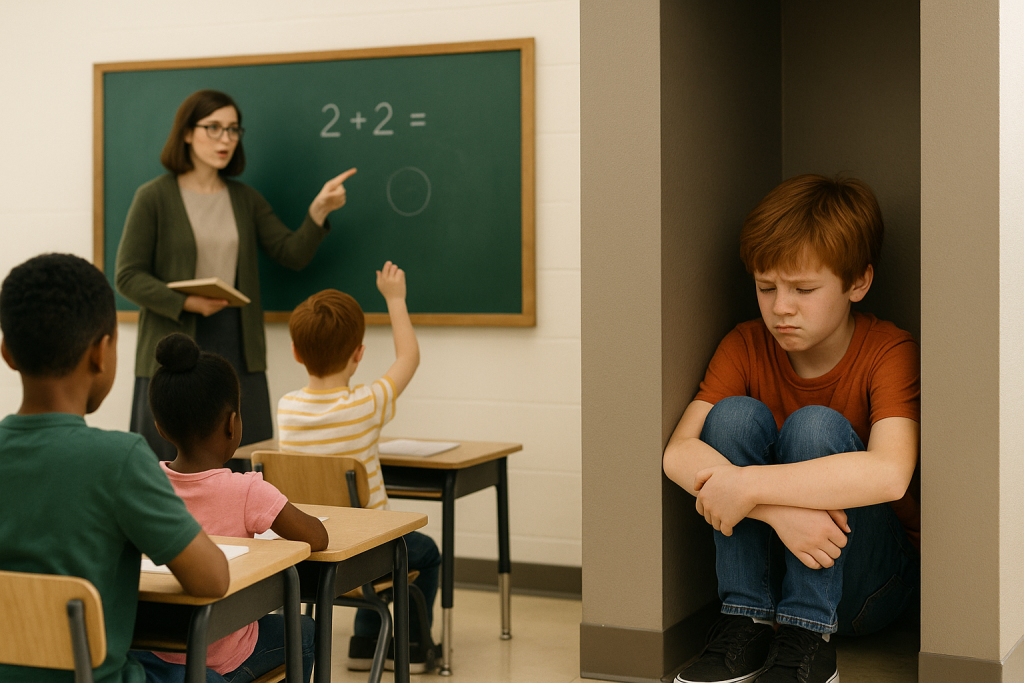
Attention-Deficit/Hyperactivity Disorder (ADHD) affects millions of children worldwide, often showing up in classrooms as difficulty focusing, impulsive behavior, or restlessness. While these behaviors can be challenging for educators, they are not signs of defiance. They are symptoms of a neurodevelopmental difference that requires understanding and tailored support. When schools respond with punishment, particularly by confining children to small spaces, the result can be emotional harm rather than behavioral improvement.
Common Misunderstandings in Schools
Many educators are under pressure to maintain order and meet academic standards, yet ADHD behaviors can easily be misinterpreted. A child who blurts out answers, leaves their seat, or fidgets constantly may seem inattentive or disrespectful. However, these actions often stem from the child’s struggle to regulate attention and energy levels.
When teachers resort to punitive measures such as isolation in a small room, “time-out closets,” or removing recess privileges, the message the child receives is one of shame. This approach not only fails to address the underlying neurological challenges but also increases emotional distress and erodes trust between teacher and student.
The Harm of Punishing in Small Spaces
Confining a child with ADHD in a small or enclosed space can be particularly damaging. Children with ADHD often experience sensory sensitivities and heightened anxiety. Being forced into a confined area can trigger panic, dysregulation, and even trauma responses.
Research from the National Institute of Mental Health (NIMH) and the Child Mind Institute shows that children with ADHD are more prone to emotional dysregulation. Isolation as punishment can intensify feelings of rejection and failure, leading to long-term effects such as low self-esteem, school avoidance, or oppositional behavior.
Furthermore, these practices can reinforce a negative feedback loop: the child acts out, is punished, feels misunderstood, and acts out again. Breaking this cycle requires a shift from punishment to support.
The Science Behind ADHD and Emotional Regulation
ADHD affects the brain’s executive function systems—those responsible for attention, impulse control, and emotional regulation. This means that children with ADHD are not misbehaving intentionally; they are struggling with self-regulation skills that neurotypical peers develop more easily.
When faced with stress or frustration, children with ADHD are more likely to react impulsively. Small-space punishment does not teach coping or problem-solving skills. Instead, it activates the brain’s stress response, making it even harder for the child to regain control.
Neuroscientific studies, including those published in The Journal of Child Psychology and Psychiatry, highlight that children with ADHD benefit more from positive reinforcement and structured environments than from punitive measures.
Effective Alternatives
Educators can replace punishment with strategies that address the root of the behavior and help children learn self-regulation:
- Movement breaks: Allowing brief, structured physical activity helps release energy and improve focus.
- Positive reinforcement: Recognizing effort and small successes encourages motivation and builds confidence.
- Collaborative problem-solving: Working with the child to identify triggers and solutions builds skills and mutual respect.
- Sensory tools: Fidget items, noise-canceling headphones, or weighted cushions can help manage sensory overload.
- Predictable routines: Clear structure and visual schedules reduce anxiety and improve consistency.
- Restorative conversations: Instead of isolation, guided discussions help children understand the impact of their behavior and repair relationships.
When educators shift their mindset from control to connection, children with ADHD are more likely to feel supported, safe, and ready to learn.
Building a Supportive Classroom Environment
A classroom that supports neurodiversity benefits all students. Training teachers on ADHD, implementing flexible seating, and incorporating social-emotional learning can transform the learning experience. Creating an environment where mistakes are seen as learning opportunities fosters resilience and empathy.
Parents and teachers can collaborate by sharing observations, using consistent language about behavior, and celebrating progress. This partnership reinforces that children with ADHD are capable of thriving when understood rather than punished.
Conclusion
Punishing children with ADHD by confining them in small spaces does not correct behavior—it deepens misunderstanding and emotional pain. Instead, effective classroom strategies rooted in empathy, movement, and collaboration help children learn to manage their energy and emotions. With awareness and proper tools, schools can replace punishment with compassion, allowing every child to reach their potential.
Sources:
- National Institute of Mental Health (NIMH) – “Attention-Deficit/Hyperactivity Disorder (ADHD)”
- Child Mind Institute – “Discipline and ADHD”
- Journal of Child Psychology and Psychiatry – “Neural Mechanisms of Emotional Regulation in ADHD”
- Centers for Disease Control and Prevention (CDC) – “ADHD in the Classroom: Helping Children Succeed”