
Turning motivation science into everyday parenting for ADHD
If your rewards have ballooned from stickers to a small pony and your chart still isn’t moving the needle, you’re not alone. In our first post: The 24‑Hour Superpower Tune‑Up: Sleep, Routines, and Movement. We talked about building a great “pit crew” of sleep, routines, and movement so your child’s fast, fun brain has the support it needs. This next step is the steering: quick, specific praise; small‑and‑soon rewards; and calm, brief consequences that keep the day on track.
Why reward systems flop and what to change
- Too delayed: ADHD time tends to be “now” vs. “not‑now.” A reward tonight for a morning behavior won’t connect. Bring reinforcement as close to the behavior as possible.
- Too big or too far away: A giant weekend prize for Tuesday behavior loses power by Thursday. Small‑and‑soon beats big‑and‑late.
- Too many targets: Eight goals on one chart splinters attention. Pick one to three clear, observable behaviors.
The psychology in plain language
- Behavior grows where it’s watered. Specific, immediate praise and small rewards right after the behavior strengthen the “do it again” signal.
- Consistency > intensity. A little reinforcement many times beats giant rewards once in a while.
- Consequences teach best when they’re boring, brief, and predictable. Big lectures and big punishments spike emotion but change little.
Start with praise (your most powerful, free tool). Make praise your first response. ADHD brains perk up with fast, specific feedback, and your attention is a huge reinforcer.
- Sportscaster praise: Say exactly what you saw. “You hung your backpack on the hook without a reminder—that’s follow‑through.” Skip vague “good job.”
- 3‑to‑1 ratio: Aim for three labeled praises for every one correction. It feels awkward at first. It works.
- Praise the process: “You started within one minute,” “You stuck with it for five minutes,” “You asked for help calmly.”
- Add a tiny token sometimes: A high‑five, sticker, or point. Not every time, just enough novelty to keep it interesting.
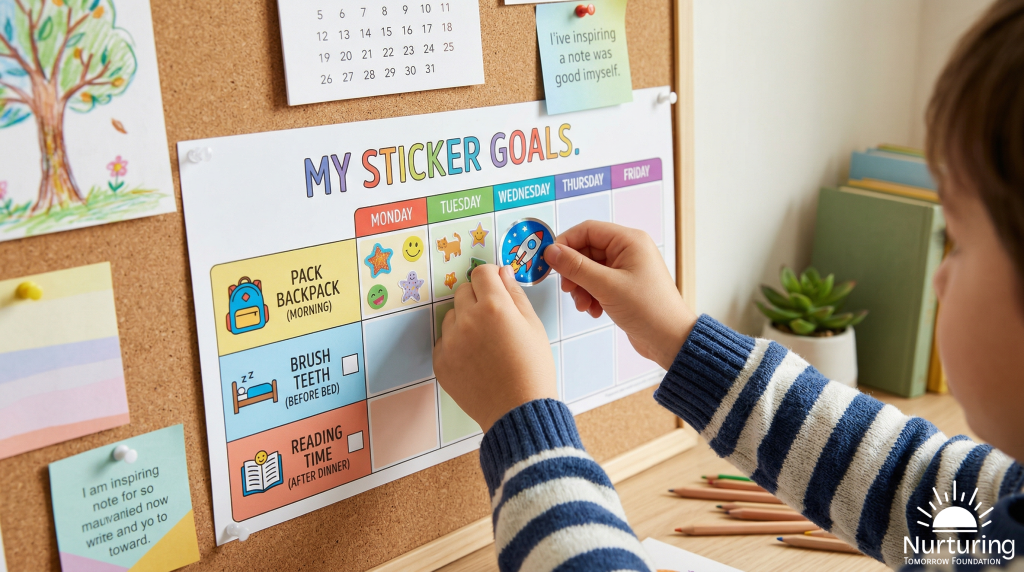
Build a token system that doesn’t backfire. Think of tokens as “behavior money.” Kids earn small, immediate tokens for specific behaviors and later trade them for privileges or small items. Keep it simple and near‑instant.
Step 1: Pick 1–3 target behaviors
- Make them observable and short: “Start homework within 2 minutes of the timer,” “Teeth brushed by 7:45,” “Use calm words when frustrated.”
- Define the when/where: “Weeknights,” “after dinner,” “before school.”
Step 2: Choose tokens and deliver fast
- Tokens: Stickers, tally marks, poker chips, or a points note on your phone—whatever you won’t lose and your child finds fun.
- Immediate feedback: Deliver the token within 10 seconds of the behavior when you can. If you miss it, praise anyway.
- Easy exchange rate: Start generous. Example: 5 tokens = 10 minutes of screen time, choosing dessert, picking the bedtime story, or a small trinket.
Step 3: Make a small rewards menu. Mix daily and every‑few‑days options so kids don’t wait too long.
- Daily/near‑immediate: extra story, pick the dinner playlist, 10 minutes of a favorite game, stay up 10 minutes later.
- Every 2–3 days: choose Saturday breakfast, rent a $2.99 movie, craft time with you, small toy under $5.
- Weekly: park of choice, baking project, one‑on‑one “date” with a parent.
Step 4: Post it where it happens
- Put the chart by the action spot (desk, bathroom, or door).
- Keep it clean: big font, 1–3 lines, check boxes. Visuals beat lectures.
A quick example (homework start)
- Target: “When the timer dings, start within 2 minutes.”
- Token: 1 point each successful start; 5 points = 10 minutes favorite game after homework.
- Script: “Timer dinged, you opened math and wrote the date—there’s your point. That’s smooth starting.”
- Calm fail: “No point this time. Let’s reset—start now and I’ll stand by for 60 seconds.”
Avoid reward inflation
- Keep rewards small but meaningful. Control and connection beat buying stuff: choosing the playlist, picking the bedtime story, one‑on‑one time.
- Rotate to refresh novelty rather than making rewards bigger.
- When the behavior is steady for two weeks, shift to intermittent reinforcement (token ~60–70% of the time) while keeping praise frequent.
Consequences that teach (without drama), consequences aren’t punishments; they’re feedback loops. The best ones are brief, predictable, and paired with a path back on track.
- Pre‑agree and post it: “If the controller is thrown, game pauses for 5 minutes. After 5 minutes and a calm restart, you can earn again.”
- Short and certain beats big and rare.
- Teach the repair: After calm, practice the right behavior once, then move on.
- Neutral tone, low words: “This is the pause we agreed on.” Save discussions for later.
Common tricky spots and fixes
- Arguing every step: Don’t debate. Point to the chart. Restate first/then: “First timer start, then point.” Repeat once, then use the brief pause if needed.
- Token blowouts: Early on, frequent earning builds momentum. Later, cap certain rewards per day and add bigger, non‑material options (choose Saturday activity).
- Sibling sabotage: Give each child their own chart/tokens. Add earned “together” rewards (movie night they co‑pick) to align interests.
- Charts fading after a week: Refresh the look, not the rules: new stickers, colors, or a theme to renew novelty.
Keep it developmentally smart
- Ages 5–7: Use pictures, immediate rewards, tiny targets (60–120 seconds). Model and co‑regulate.
- Ages 8–11: Add time windows and self‑check boxes; begin intermittent reinforcement once habits stick.
- Tweens: Co‑create targets/rewards; link tokens to autonomy (later weekend bedtime, device choices).
Scripts you can borrow
- Praise: “You… [specific behavior]. That shows… [skill].”
“You packed your folder when the timer dinged. That shows responsibility.” - First/then: “First [target], then [earned reward].”
“First teeth by 7:45, then you pick the song in the car.” - Calm consequence: “We agreed if [behavior], then [pause]. It’s the pause now. After [time], we try again and you can earn.”
- Reset: “Let’s restart from step one. I’ll time you for 60 seconds.”
How to know it’s working. Within 7–10 days, look for:
- Faster starts
- Shorter protests
- Smoother transitions
- Your child reminding you about the chart (a great sign they feel it’s fair) Track one tiny metric, e.g. “number of prompts to start homework”, for a week. If it trends down, keep going. If nothing moves, tweak one element: the target, token timing, or reward menu.
When to get backup: If every consequence escalates emotion, shorten the pause and strengthen calm coaching; practice a “cool‑off” script during calm times. If tokens turn into currency battles, switch to a points‑on‑paper system you control and exchange at set times. If behavior is risky or school calls are frequent, add support from your pediatrician, a behavioral therapist, or the school team. Charts are tools, not cures.
Why this works
- ADHD brains respond best to quick, clear feedback and small wins—exactly what specific praise and small‑and‑soon rewards provide.
- Predictable systems lower stress for your child and for you, just like routines from our first post reduce decision load.
- Movement and sleep from the “pit crew” post boost the brain’s capacity to use these systems; praise/rewards then steer that capacity toward the behaviors you want to grow.
What’s next in the series
- Big Feelings, Small Steps: Meltdown Prevention and Co‑Regulation
- School Is a Team Sport: Winning with 504s, IEPs, and Classroom Hacks
- ADHD Treatment Decoded: Meds, Therapy, and Data‑Informed Decisions