

Coaching calm before, during, and after the storm
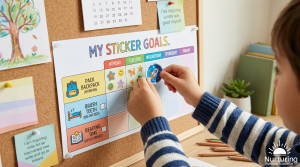
If you’ve watched a tiny frustration turn into a full‑blown meltdown, you know how fast the runway disappears. In our first post, “The 24‑Hour Superpower Tune‑Up: Sleep, Routines, and Movement for ADHD,” we built the pit crew that steadies attention and emotions. In the second, “Sticker Charts That Actually Work: The Psychology of Praise, Rewards, and Consequences”, we added steering with quick praise, small‑and‑soon rewards, and calm, predictable consequences. This post is the braking system: spotting early signals, preventing escalation, and co‑regulating through big feelings so your child can learn skills and recover faster.
Why meltdowns happen ADHD often comes with sensitive dials: quick frustration, intense feelings, and a nervous system that revs fast. When sleep is short, routines wobble, or demands pile up, the “window of tolerance” narrows. Add a tricky transition or a surprise change, and the lid flips. None of this is moral or motivational; it’s a body‑brain surge. Calm coaching and simple, practiced plans beat lectures every time.
The three phases: Catch, Calm, Close
- Catch: Notice early cues and change course
- What to watch for: rising voice, faster speech, clenched hands, refusal language (“Nope!”), jerky fidgeting, leaving the task, “one more” bargaining.
- Micro‑preventions:
- Name and normalize: “Looks like this is getting tricky.”
- Shrink the next step: “Just the first two problems,” or “Shoes only; coat can wait.”
- Offer two good choices: “Desk or kitchen table?” “Blue pen or pencil?”
- Use first/then: “First two minutes of reading, then pick the playlist.”
- Praise any pivot: “You took a breath and came back—that’s strong self‑control.”
- Calm: Co‑regulate before you problem‑solve. You can’t reason with a brain in alarm. Help the body settle first; thinking will follow.
- Body‑first tools (pick one, do it together):
- Breathing: 10 slow exhales longer than inhales, or box breath (4‑4‑4‑4).
- Heavy work: wall push‑ups, chair squats, carry laundry, “push the doorframe.”
- Sensory reset: a cool washcloth or a brief cold-water splash.
- Move‑and‑return: “Let’s walk to the mailbox and back, then try again.”
- Co‑regulation stance:
- Fewer words, softer tone, slower pace.
- Validation without fixing: “I get why that’s frustrating.”
- Offer proximity, don’t force touch.
- Safety red lines:
- If there’s risk (throwing, hitting), calmly clear the area and use a brief, predictable pause you agreed on: “Pause time. After 3 minutes, we’ll try the calm plan again.”
- Close: Repair, teach, and reset. When the tide goes out, that’s your window to learn and prevent next time.
- Debrief in one minute:
- “What made it hard?” (child’s words first)
- “What helped?” (name the tool that worked, even 10%)
- “What’s one tweak for next time?” (shrink the step, add a choice, move the task earlier)
- Practice once (briefly):
- Rehearse the first 30–60 seconds of the tricky step while calm—the brain remembers the last rep.
- Repair ritual:
- If feelings were hurt or property affected, do a simple repair: a note, a reset of the space, or a respectful redo of the ask. Then move on.
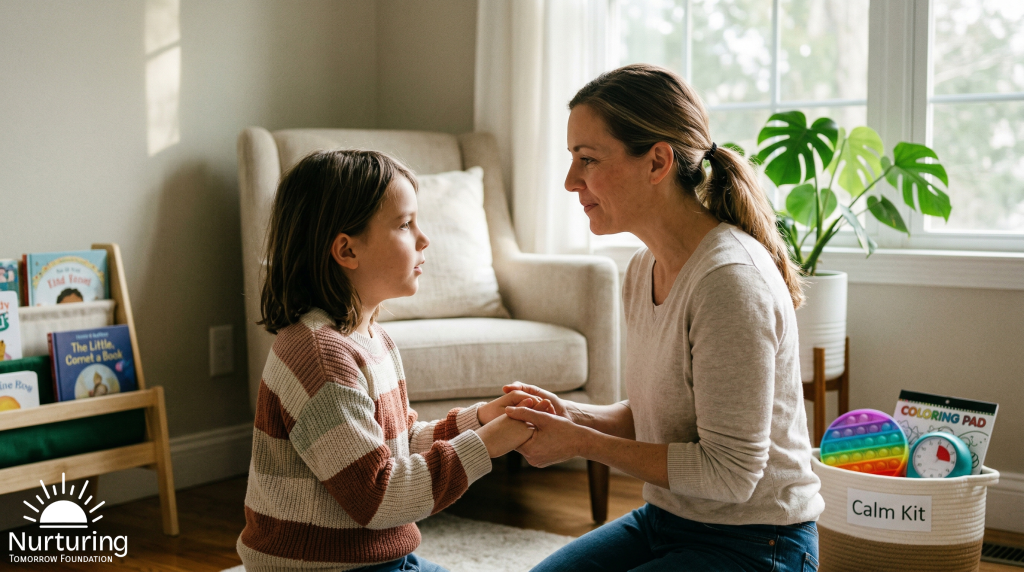
Build your Calm Kit (home and school). This is routine thinking from post one, applied to emotions: make regulation easier by staging the environment.
- Tools to stash:
- Breathing card (trace a square)
- Headphones and a short playlist
- Fidget or putty, coloring pad, sticky notes for “worry parking”
- Cool pack or washcloth, small weighted lap pad (if soothing)
- Where to keep it:
- Home: a “calm corner” that’s cozy, not punitive
- School: backpack pouch + agreed classroom plan (quiet table, office pass, short errand)
- How to introduce:
- Practice when calm, for 2–3 minutes, a few times a week. Call it a “brain reset.”
Make the day less meltdown‑prone. Prevention lives in boring details—exactly where ADHD support shines.
- Protect the basics:
- Sleep anchors and movement “brain boosts” from post one expand the window of tolerance.
- Front‑load the hard stuff:
- Put heavy cognitive lifts earlier, then follow with something preferred.
- Use predictability:
- Post a visual schedule; preview one change at a time (“After homework, we’ll go straight to the store for 10 minutes.”)
- Shrink and sequence:
- Break big asks into two‑minute chunks with short, labeled praise between.
- Keep praise flowing:
- From post two: aim for three labeled praises for every correction during tough transitions.
When words make it worse (say this instead)
- “Calm down!” → “Let’s breathe together.”
- “You’re overreacting.” → “This feels big right now.”
- “Stop arguing.” → “I’ll listen after one breath.”
- “If you don’t stop, no screens all week!” → “Pause for 3 minutes. Then first [small step], then [earned thing].”
Common flashpoints—and quick plans
- Transitions away from screens
- Two warnings (5 min, 1 min), save point, body‑first reset (10 slow exhales). First/then to next step. Pre‑agreed brief pause if throwing/slamming happens.
- Homework start
- Movement boost, two‑minute starter, timer, sportscaster praise for the first step. If stuck, shrink to 60 seconds and sit nearby for the first minute.
- Leaving the house
- Visual by the door; shoes first, then coat; immediately earned privilege (music choice in the car).
How you’ll know it’s working. Look for “smaller and shorter” before you look for “gone.”
- Faster recoveries (e.g., from 15 minutes to 8)
- Fewer big escalations per week
- More times your child uses a tool you modeled (“I need water,” “Let’s walk.”)
- You say fewer words in the heat of the moment—and everyone settles sooner
If the storms stay frequent or unsafe. If meltdowns are daily, last long, or involve safety risks, add support: talk with your pediatrician, consider a behavioral therapist who can coach co‑regulation and emotion skills, and loop in the school team for a consistent plan. Skills grow faster when the adults around a child use the same playbook.
Why this fits with the series
- Sleep, routines, and movement (post one) lower background “noise,” making big feelings less frequent and easier to manage.
- Praise, tokens, and clear consequences (post two) give quick, predictable feedback that reduces friction and keeps practice going.
- Co‑regulation and meltdown plans (this post) help kids feel safe enough to learn—and that’s when all the other strategies stick.
Series links
- Read the series opener: “The 24‑Hour Superpower Tune‑Up: Sleep, Routines, and Movement for ADHD”
- Read post two: “Sticker Charts That Actually Work: The Psychology of Praise, Rewards, and Consequences”
What’s next in the series
- School Is a Team Sport: Winning with 504s, IEPs, and Classroom Hacks
- ADHD Treatment Decoded: Meds, Therapy, and Data‑Informed Decisions