

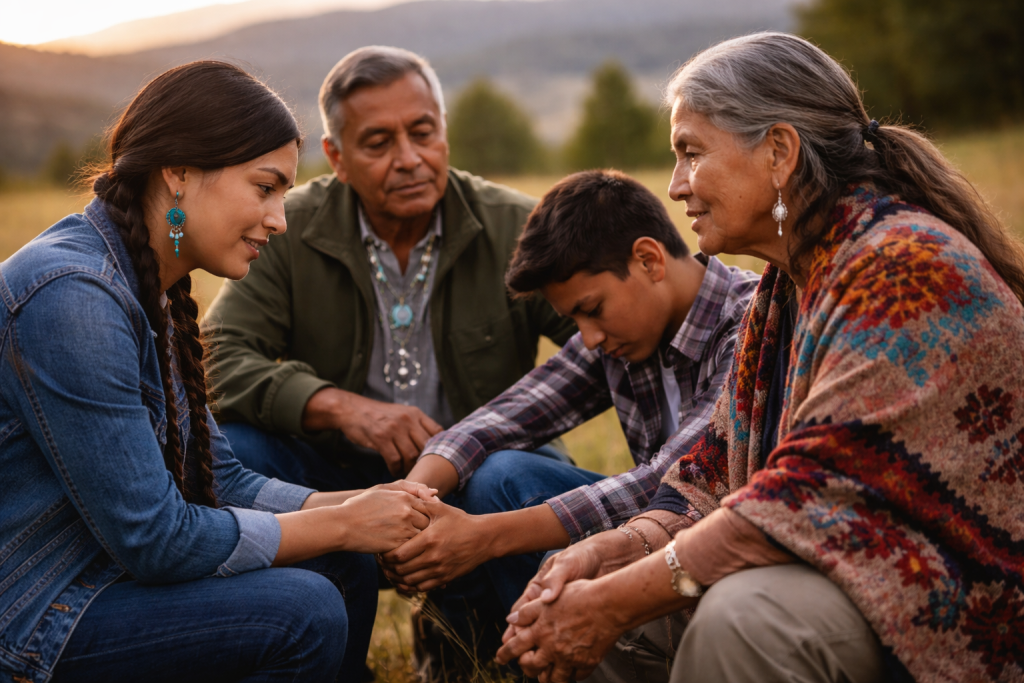

Across the United States, Native communities carry both extraordinary cultural strength and disproportionate mental health burdens. For many tribal nations, the conversation around suicide prevention and crisis response is not abstract, it is personal, urgent, and deeply rooted in history.
Supporting mental health on reservations requires more than expanding services. It requires understanding context, honoring sovereignty, and investing in culturally grounded solutions that communities themselves lead.
The Scope of the Crisis
American Indian and Alaska Native populations experience some of the highest suicide rates in the country. According to the Centers for Disease Control and Prevention, suicide is one of the leading causes of death among Native youth and young adults. In some tribal communities, youth suicide rates are several times higher than the national average.
Access to care compounds the problem. Many reservations are located in rural or geographically isolated areas. Behavioral health providers are often scarce, underfunded, or stretched across large regions. The Indian Health Service, which provides health care to many tribal communities, has historically faced chronic underfunding, limiting the availability of specialized mental health services.
When someone is in crisis, distance matters. If the nearest emergency behavioral health provider is hours away, response times can be dangerously long. Crisis hotlines and mobile response units are expanding nationally, but infrastructure does not always reach remote tribal lands equitably.
Understanding the Root Causes
To understand the present, we must acknowledge the past.
Historical trauma, including forced relocation, boarding schools, family separation, and cultural suppression, continues to reverberate across generations. Researchers describe historical trauma as cumulative emotional and psychological wounding that spans generations, influencing present day mental health outcomes.
Economic disparities also play a significant role. Many reservations face high unemployment rates, housing instability, and limited educational opportunities. Chronic stress associated with poverty is strongly linked to depression, substance use disorders, and suicidal ideation.
There is also mistrust of external systems. Centuries of broken treaties and harmful policies have left many Native communities understandably cautious about government institutions and outside intervention. Mental health support that ignores this reality risks being ineffective or rejected.
What Culturally Responsive Crisis Support Looks Like
Effective crisis response in Native communities is rooted in culture, sovereignty, and community leadership.
Many tribes are developing their own crisis response teams that integrate traditional healing practices with evidence based care. Community health representatives, who are trusted local members trained to support health initiatives, often play a vital role in identifying early warning signs and connecting individuals to help.
Cultural reconnection is not symbolic, it is protective. Programs that incorporate language revitalization, traditional ceremonies, land based activities, and elder mentorship have been associated with stronger identity formation and reduced suicide risk among youth. A sense of belonging and cultural pride can act as powerful buffers against despair.
Youth mentorship programs led by tribal members are especially impactful. When young people see adults who share their background and have navigated similar challenges, it strengthens hope and resilience.
What Nonprofits and Allies Can Do
For organizations outside tribal nations, the goal is not to lead, but to support.
First, fund tribal led initiatives directly. Community designed programs are more likely to be trusted and effective than externally imposed models.
Second, prioritize culturally informed partnerships. This means listening before acting, compensating community leaders for their expertise, and respecting tribal sovereignty in all decisions.
Third, advocate for policy changes that expand crisis infrastructure in rural and tribal communities. This includes mobile crisis teams, telebehavioral health expansion, and sustained funding for the Indian Health Service.
Finally, center strengths, not just statistics. Native communities are not defined by crisis. They are defined by resilience, tradition, and powerful networks of kinship and care.
Moving Forward with Respect and Responsibility
Supporting mental health and suicide prevention on reservations is not a short term project. It requires long term investment, humility, and collaboration.
When crisis response is culturally grounded, locally led, and properly resourced, it becomes more than emergency intervention. It becomes a pathway to healing that honors history while protecting future generations.
For readers who want to support this work, seek out tribal organizations in your region, advocate for equitable funding, and continue learning about the unique strengths and challenges Native communities face. Real progress begins with informed partnership.
Sources
Centers for Disease Control and Prevention, Suicide Data and Statistics
Indian Health Service, Behavioral Health Services Overview
Substance Abuse and Mental Health Services Administration, Tribal Training and Technical Assistance Center
Brave Heart, M.Y.H., Historical Trauma and Intergenerational Transmission
U.S. Department of Health and Human Services, National Strategy for Suicide Prevention