
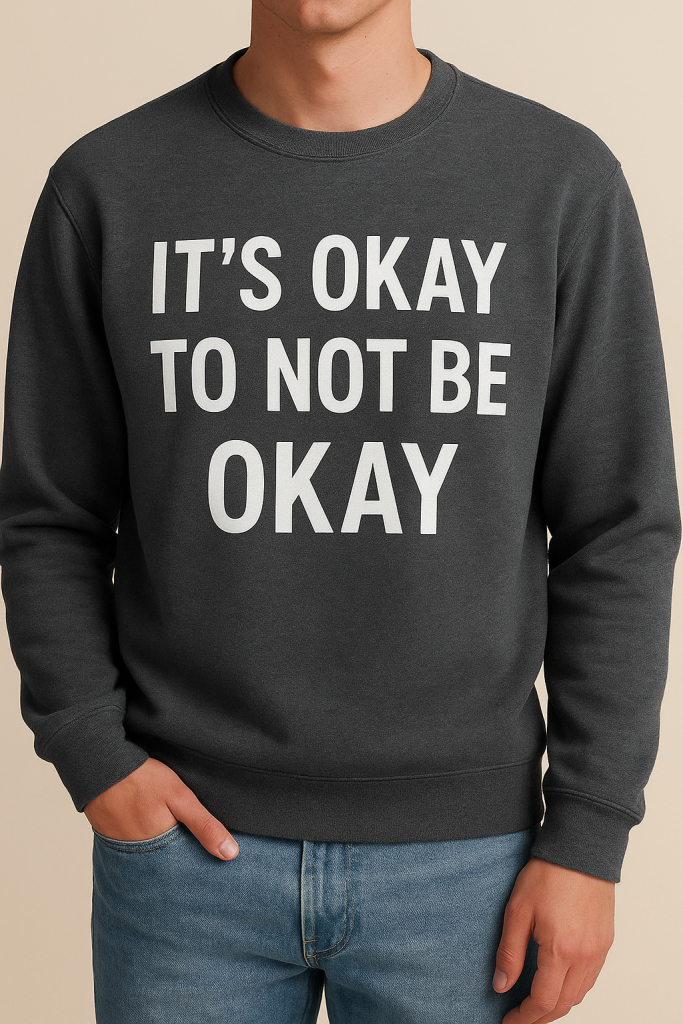
Fashion has always been a form of self-expression. But in recent years, clothing has taken on a new role: mental health advocacy. From sweatshirts embroidered with affirmations to T-shirts that say “It’s okay to not be okay,” apparel is becoming a powerful way to spark conversation and reduce stigma around mental health.
The Rise of Mental Health Messaging in Fashion
As society becomes more open about mental health, brands—especially smaller, mission-driven ones—are weaving emotional wellness into their products. Mental health clothing is no longer just about style. It’s a movement.
This trend includes:
- Apparel with messages like “You are not alone” or “Anxiety is real”
- Designs featuring symbols of support, like semicolons or brain-heart icons
- Merch from nonprofits or advocacy groups tied directly to mental health causes
Such items aren’t just aesthetic. They’re intentional, meant to speak to those struggling and create a sense of solidarity.
Clothing as a Silent Conversation Starter
Wearing a mental health message on your chest does more than make a statement—it invites connection. People who see it might feel less isolated or more willing to share their own experiences.
A hoodie that reads “Be kind to your mind” could prompt a co-worker to open up. A stranger at the grocery store might say, “Thanks for wearing that. I needed it today.” These are small but meaningful interactions that remind us we’re not alone in our struggles.
Normalizing Conversations Through Fashion
Mental health still carries stigma, particularly in cultures or communities where emotions are rarely discussed. Apparel that promotes openness can serve as a gateway. It reduces the pressure of initiating a vulnerable conversation and shifts the tone from taboo to accepted—even celebrated.
Instead of waiting for Mental Health Awareness Month or a classroom lesson, fashion brings the conversation into everyday spaces: buses, gyms, parks, classrooms, and coffee shops.
Empowering the Wearer
For the individual wearing mental health-themed clothing, the experience can be empowering. It’s a form of quiet activism—a declaration of values, lived experience, or support for others.
In some cases, people wear these items to remind themselves of their progress, their coping strategies, or simply their worth. Others wear them in honor of loved ones navigating depression, anxiety, PTSD, or other challenges.
It’s an act of visibility that can be both personal and collective.
Real Stories, Real Impact
A 2023 survey by The Mighty found that 67% of respondents who wore mental health-themed clothing reported feeling more connected to others. One participant shared:
“I wore a shirt that said ‘Anxious but Trying’ to a family BBQ. I’d never talked about my anxiety before, but my cousin pulled me aside and said, ‘Me too.’ That started a conversation we should’ve had years ago.”
These moments don’t solve everything—but they open doors.
Considerations: Sensitivity and Authenticity
While the rise of mental health messaging in fashion is largely positive, it’s important to approach it with care. Critics warn against the commercialization of struggle, especially when:
- Brands profit without giving back to mental health causes
- Messages are overly simplistic or used without context
- Apparel trivializes serious conditions
The most impactful clothing is made or supported by those with lived experience, or by organizations actively contributing to mental health support.
Buyers should look for transparency: Is the message genuine? Is the brand involved in advocacy? Does it educate or just sell?
Beyond Clothing: Building a Culture
Mental health apparel is a tool—not the whole solution. It complements other forms of awareness like education, peer support, and accessible care. But in a society that often tells people to “keep it to themselves,” clothing offers a refreshing counter-message: You’re allowed to be seen.
Conclusion: When Fashion Becomes a Bridge
What we wear can tell the world who we are, what we value, and what we believe in. Mental health clothing creates micro-moments of understanding in an often disconnected world. It’s fashion with a purpose—turning everyday outfits into opportunities for empathy, connection, and healing.
Sources:
- The Mighty. (2023). Mental Health and Apparel Survey Results
- NAMI. (n.d.). Mental Health Advocacy Through Community Campaigns
- BBC. (2021). Why Mental Health Messages Are Taking Over Streetwear