
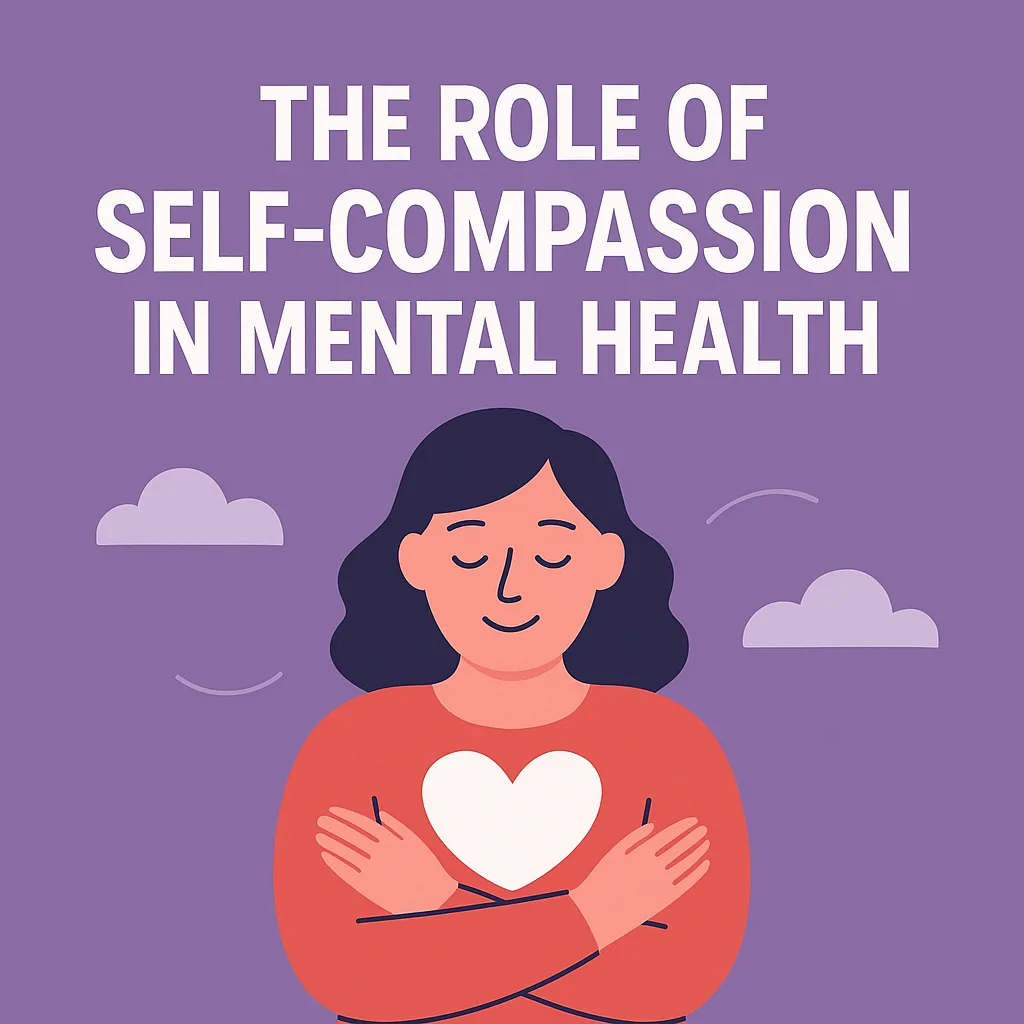
Self-compassion isn’t just a feel-good concept—it’s a powerful tool for protecting mental health. Many people are quick to offer kindness to others but respond to their own struggles with harsh self-criticism. This internal judgment can worsen anxiety, depression, and stress. By learning to treat ourselves with the same care we offer loved ones, we can build emotional resilience, reduce shame, and support long-term well-being.
What Is Self-Compassion?
Self-compassion is the practice of treating yourself with kindness, understanding, and patience during times of difficulty or perceived failure. It has three core elements:
- Self-Kindness: Being gentle and supportive toward yourself rather than judgmental or critical.
- Common Humanity: Recognizing that struggle and imperfection are part of the shared human experience.
- Mindfulness: Observing negative thoughts and feelings without suppressing or exaggerating them.
How Self-Compassion Supports Mental Health
- Reduces Anxiety and Depression
- Studies show that self-compassion can significantly lower levels of anxiety and depression by reducing the internal pressure to be perfect.
- Builds Emotional Resilience
- When you face setbacks with kindness, you’re more likely to bounce back instead of spiraling into self-doubt or shame.
- Improves Motivation
- Contrary to the myth that being hard on yourself leads to growth, self-compassion actually enhances intrinsic motivation. People who forgive themselves tend to learn from mistakes and try again.
- Supports Recovery from Trauma
- Self-compassion has been linked to healthier coping and recovery in people who have experienced trauma or chronic stress.
How to Practice Self-Compassion
- Talk to Yourself Like a Friend: When you catch your inner critic speaking up, pause and reframe your thoughts as if you were comforting someone you care about.
- Use Affirmations or Journaling: Write down kind, realistic messages to yourself when you’re struggling.
- Accept Imperfection: Understand that it’s okay to not have all the answers and to make mistakes along the way.
- Pause and Breathe: Take mindful breaks during moments of stress to ground yourself.
Encouraging Self-Compassion in Others
Parents, educators, and caregivers can model self-compassion by acknowledging their own mistakes and showing vulnerability in healthy ways. This teaches kids and teens that being kind to yourself isn’t weakness—it’s strength.
A Powerful Shift in Perspective
Choosing self-compassion over self-criticism doesn’t mean avoiding responsibility. It means choosing to grow with care rather than shame. Over time, this approach fosters deeper confidence, stronger relationships, and improved mental health.
Sources:
- Dr. Kristin Neff – “Self-Compassion Research”
- American Psychological Association – “The Benefits of Self-Compassion”
- Harvard Health – “How Self-Compassion Supports Mental Health”