

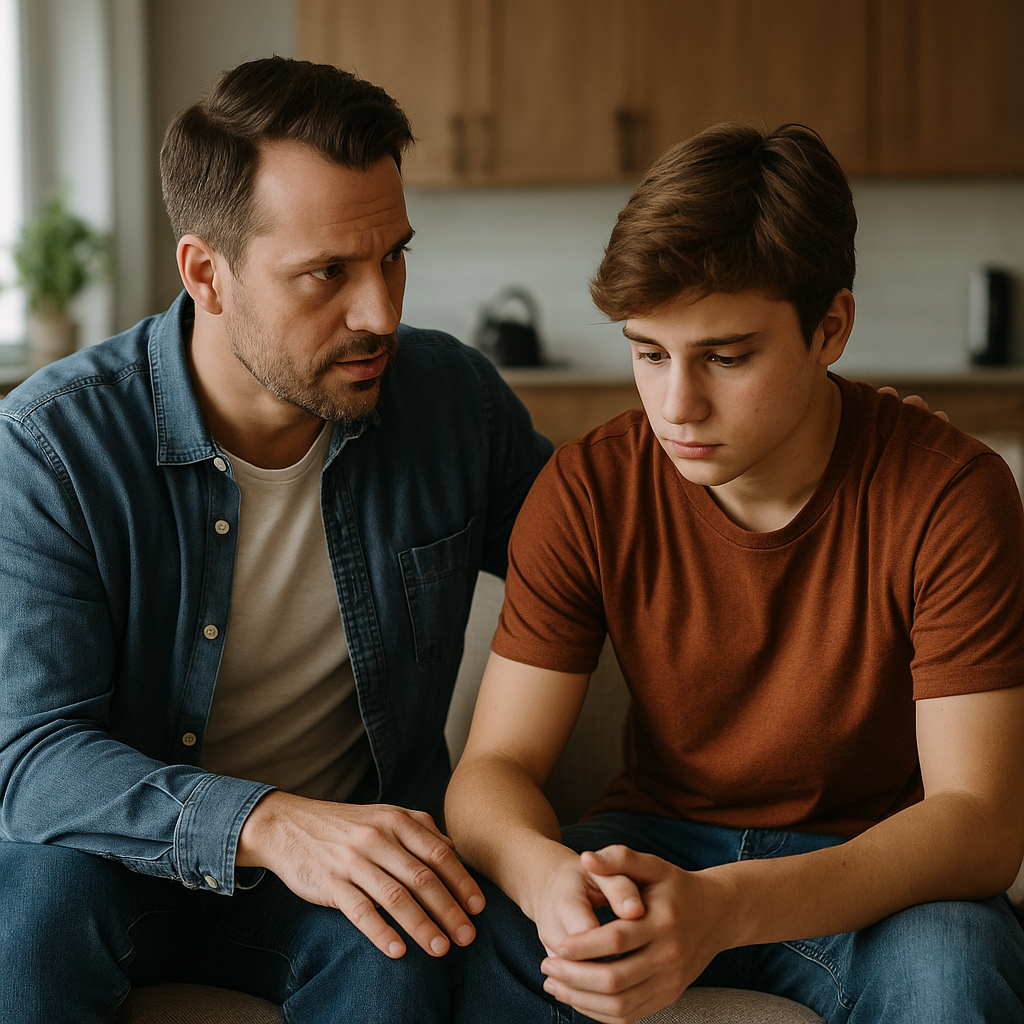

Across generations, many men have been taught to hide their emotions, stay tough, and “deal with it” in silence. This expectation, often seen as strength, can instead lead to isolation and unspoken struggles. Today, as conversations around mental health become more open, there is a powerful opportunity to change that pattern. By teaching teen boys that it’s okay to talk about mental health, we can help build a future where men support themselves and each other with empathy and confidence.
The Legacy of Silence
Cultural norms have long reinforced the idea that emotional expression equals weakness, especially for men. Boys often absorb messages that tell them to “man up” rather than ask for help. This learned behavior doesn’t disappear with age. According to the American Psychological Association, men are significantly less likely than women to seek professional mental health support, even when experiencing symptoms of depression or anxiety.
This silence comes with consequences. Studies from the National Institute of Mental Health show that men account for nearly 80% of suicide deaths in the United States, a tragic reflection of how deeply internalized emotional suppression can become. Changing this reality starts early, with the lessons boys learn about emotions during adolescence.
Teaching Emotional Awareness Early
Adolescence is a crucial period for shaping how young people view emotions and vulnerability. When boys learn that expressing feelings is normal and healthy, they develop stronger emotional intelligence, communication skills, and resilience.
Parents, teachers, and mentors play a key role by modeling openness and validation. Small but meaningful actions make a difference—asking how a teen is feeling, showing understanding when they express frustration, and acknowledging that sadness, fear, or stress are part of being human.
Research from Harvard’s Center on the Developing Child shows that boys who grow up in emotionally supportive environments are better equipped to handle challenges, show empathy, and build healthy relationships. When adults normalize emotional expression, it empowers boys to view strength not as silence, but as self-awareness.
Changing the Conversation
Shifting cultural attitudes around male mental health takes consistent effort, but progress is visible. Schools and community programs across the country are beginning to integrate emotional literacy into curricula, emphasizing the importance of communication and self-care. Coaches, teachers, and youth leaders who discuss stress, performance pressure, and self-esteem can help dismantle the idea that toughness means emotional denial.
Parents can also lead by example. When fathers, uncles, or mentors speak openly about their own stress or mental health experiences, they show boys that seeking help is not weakness—it’s courage. Conversations do not need to be heavy or formal; they can start with simple honesty about how someone feels after a long day or during a difficult time.
Building the Future of Stronger Men
Encouraging emotional openness in boys is not just about preventing mental health crises, it’s about helping them become compassionate men who can support others and themselves. A society where men talk about mental health is one where relationships are stronger, workplaces are healthier, and communities are more connected.
Every parent, educator, and mentor has the power to shape this change. By giving boys permission to feel, to express, and to seek help, we build a generation that defines strength not by silence, but by empathy and understanding.
Breaking the silence begins one conversation at a time—and those conversations can change everything.
Sources:
- American Psychological Association. (2024). Men and mental health: Understanding the barriers to seeking help.
- National Institute of Mental Health. (2024). Suicide prevention and gender differences in mental health treatment.
- Harvard University, Center on the Developing Child. (2023). The importance of emotional development in boys.
- Movember Foundation. (2023). Changing how men think about mental health.